
Gardening Blog
Never miss a blog post, follow me on Facebook.
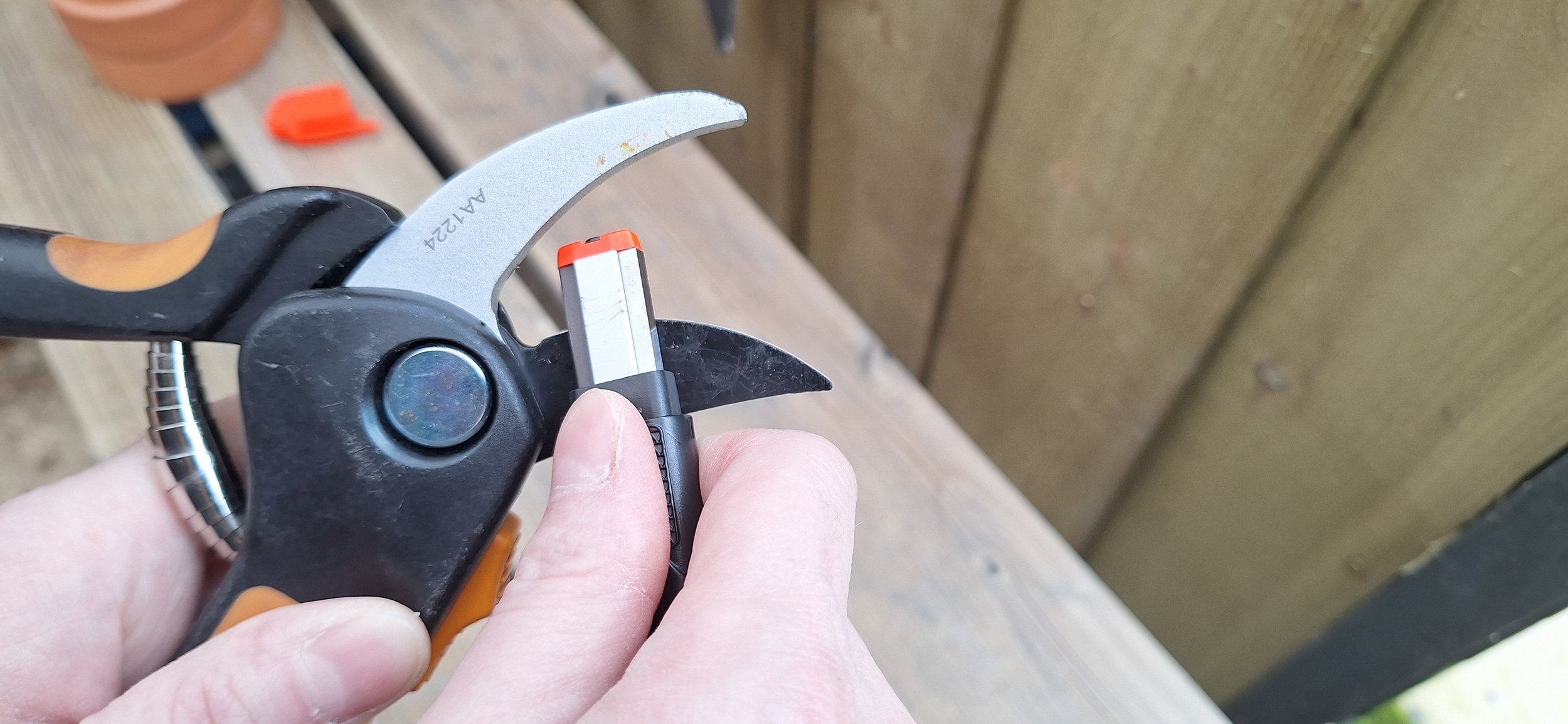
Garden tools: The how and the why you should look after them.
As a gardener I know that buying new garden tools can be expensive. This means that I will go out of my way to look after them and to make sure they are properly maintained, so that they last for longer

Budget friendly gardening: Cost saving tips without breaking the bank
Budgets come in all shapes and sizes. You may think that to create a beautiful garden requires a large budget, but with careful planning and a few tips it is possible to create a beautiful garden space while keeping to a budget.

Cut above the rest: how to take stem cuttings
As a keen gardener I am always looking for ways to extend my plant collection. As much as I enjoy a trip to my local garden centre or nursery, there is something very satisfying about creating new plants for free.

Waste not, want not: Starting your first compost bin
Today we are talking about compost. I’m not talking about the stuff you buy in a plastic bag from your local gardener centre, but how we go about making our own compost.

The seven principles of plant selection
I am going to introduce to you to a fantastic tool that will help to ensure that the plants you place in your garden thrive!
This is a very well known and respected garden design theory called the 7 principles of plant selection. It is essentially a checklist of things to consider when choosing plants for your garden.

The Garden Code: Understanding Gardening Terms
Visiting your local garden centre, it can sometimes feel overwhelming with the sheer amount of gardening jargon that is thrown around by the experts.

How to guide: sowing seed
Any keen gardener will tell you, nothing quite beats the satisfaction of growing a plant from seed. Knowing that you have created life and watched it grow from its first true leaves to the mature plant you now see before you.

Year round interest: creating a garden that looks great all year round.
When designing a new garden, its important to consider seasonal interest. By that I mean how your garden will look during each season.
With some careful planning you are able to create a garden that will not only look good during the summer months, but also during the cold dark winter months.

What’s in a name? Why do botanists use Latin to name plants?
Welcome to the wonderful world of nomenclature, which is a system used by botanists to categorise plants. Plants have both a scientific name as well as a common name, but why is this the case?

There’s more to soil than meets the eye.
Did you know that there is more to the soil in your garden than you may originally have thought? It is important to give your plants the right growing conditions so that they can thrive and are more resistant to pests and diseases.

Garden Design Principle: Movement and Rhythm
It is important to consider how we move through an outside space. Practically you could place a straight path down a lawn to get from one end of the garden to the other, but where’s the interest in that?
A much more interesting way would be for the garden designer to control how we physically move through the space, or how our eyes move across the space.

Garden Maintenance: February
What you need to do this month to keep your garden looking beautiful - read on!

Garden Design Principle: Balance and Proportion
When designing a garden there are several design principles which act as a guide throughout the design process. When viewing a garden, we automatically evaluate what we see to try and make sense of the space.

Should I stay or should I go: deciding to keep, move or remove a plant from your garden.
When re-designing a garden I will always try to incorporate healthy plants that are on site into the design, although possibly relocate to a different area in the garden. We must make the decision whether to keep a plant where it is, move or transplant it to a new location, or to remove the plant completely.

Garden Design Principle: Unity and Repetition
Unity and repetition are important aspects to consider when designing the garden of your dreams. In essence, this is where each area of your garden feels that they unite with one another, which is achieved through repeating similar colours, materials, textures and plants throughout the design.

Pergolas, arbours and gazebos: What’s the difference?
Often when describing garden structures, people will use the words pergolas, arbour and gazebos interchangeably when in fact they are different structures. Let me explain the difference.

Garden Design Principle: Focal Points
Focal points are a useful tool to guide visitors around your design. These can be strategically placed so that you are encouraged to walk towards a focal point.
Upon reaching the focal point, there may be another just around the corner that you catch a glimpse of, but can’t quite see - encouraging you to walk about the next corner.